DeKalb IL Epoxy Flooring installs metallic epoxy floors in DeKalb, IL, serving surrounding cities including Cortland, Sycamore, Genoa, Elburn and Rochelle. A metallic floor is the most decorative system we pour, and with 20+ years of floor work behind us, we know it is also the least forgiving of a poorly prepared slab.
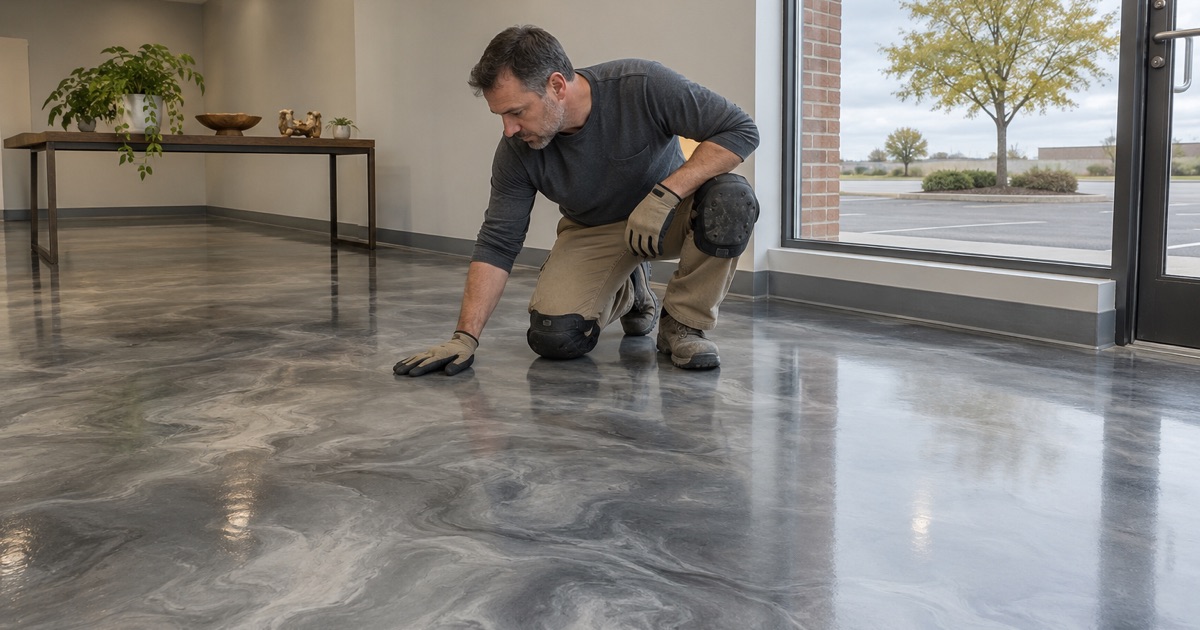
Metallic pigments suspended in clear epoxy swirl, settle and catch the light as the resin levels, leaving a marbled, three-dimensional finish no other coating can match. Every metallic floor is one of a kind. That uniqueness comes from how the resin is worked during a short window, which takes practice and a flat, sound slab underneath.
Our proposal names the primer, the metallic system, the topcoat and the finished thickness. We also show you finished floors rather than only small sample boards, because the movement in a full room reads differently from a twelve-inch square.
How a Metallic Epoxy Floor Is Made
Metallic Pigments in Clear Epoxy
Metallic pigments are fine, reflective particles mixed into a clear or tinted epoxy. As the resin is spread and flows, the particles shift, layer and settle in different directions. Light hits them at different angles, which is what gives the floor its depth and movement.
One base color can carry several metallic accent colors, from silver and pewter to copper, bronze and deep blue. The combination and how they are worked into each other decides the final look. We help you choose colors that suit the room and its lighting.
Working the Resin for Movement
The installer controls the pattern by how the resin is poured, rolled, brushed or sprayed with solvent while it is still wet. Large, slow movements create soft, flowing waves, while tighter work produces veining that reads like marble. The window to work the floor is short, so the crew has to move with a plan.
There is no undo once the resin starts to set. That is why we agree on the style and show you examples before pouring. Your input on the look you want guides how the crew works the floor.
Preparing a Slab for a Metallic Floor
Flatness and Grinding
A metallic floor shows every dip, ridge and trowel mark under its glossy surface. We diamond grind the slab to remove sealers and open the surface, then fill and grind cracks and low spots until the floor is flat. Dust is collected at the grinder throughout.
A primer coat follows to seal the concrete, which helps prevent air bubbles from rising out of the slab into the metallic layer. Outgassing can leave pinholes in an otherwise beautiful floor. Priming first keeps the metallic coat clean.
Moisture Testing Under Clear Resin
Because a metallic floor is mostly clear resin, any blistering or discoloration from moisture shows plainly. We test the slab with ASTM F1869 calcium chloride kits or ASTM F2170 probes before recommending the system. Basement slabs in particular get a careful reading.
If the moisture is high, a moisture-mitigation primer goes under the metallic coat. That adds cost and time, but it protects a floor that is expensive to redo. Moisture failure is also the first exclusion in most coating warranties, and we read that to you before the job is sold.
Where Metallic Epoxy Works Best
Basements and Living Spaces
Finished basements, family rooms and home bars are natural places for a metallic floor. The glossy, reflective finish brightens a lower level, and it is easy to clean. It looks more like a designed floor than a coating.
We often recommend a satin topcoat for living spaces, since it softens glare and hides small scratches better than a high gloss. Area rugs and felt pads protect the floor where furniture moves. The result is a floor that feels finished rather than industrial.
Showrooms, Offices and Retail
Car showrooms, salons, offices and retail shops around DeKalb use metallic floors to make an impression. The finish can be matched to brand colors or kept neutral to let products stand out. It is also durable enough for steady foot traffic.
For businesses, we schedule the work around opening hours and plan for the multi-day cure. A tough topcoat protects the floor in busy areas, and it can be refreshed later without redoing the whole system.
Garages With a Showpiece Floor
Some owners want a garage floor that looks like a showroom, and metallic epoxy delivers that look. It needs a tougher topcoat than an indoor floor, because hot tires, rock salt and calcium chloride brine all attack the finish. A UV-stable topcoat is also important where sunlight comes through the open door.
We are honest that a glossy metallic garage floor will show scratches and salt marks more than a flake floor. For a garage that sees daily winter driving, we may suggest metallic in a workshop area and flake in the parking bays.
Topcoats and Long-Term Care
UV-Stable Topcoats
Epoxy yellows in sunlight, and that ambering is most noticeable on light metallic colors. A polyaspartic or aliphatic urethane topcoat resists yellowing and protects the metallic layer from abrasion. We specify one whenever the floor sees daylight.
The topcoat also sets the final sheen, from high gloss to satin. It is the layer that takes the wear, which means it can be lightly abraded and recoated years later to refresh the floor. The metallic pattern underneath stays intact.
Keeping a Metallic Floor Looking New
Grit is the main enemy of a glossy floor, so regular dust mopping does more than anything else to keep it looking good. A neutral cleaner handles spills, and mats at entries catch dirt before it spreads. Furniture should have felt pads.
We give you written care instructions at the end of the job. Following them keeps the floor bright and extends the time before a fresh topcoat is needed.
- 20+ Years of Floor Work
- Moisture Testing in Every Scope
- Written Proposals and Contracts