DeKalb IL Epoxy Flooring installs flake epoxy floors in DeKalb, IL, serving surrounding cities including Cortland, Sycamore, Genoa, Elburn and Rochelle. A flake floor is the system we install most often in garages, and our 20+ years of floor work have shown us why: it hides flaws, adds grip and holds up to a northern Illinois winter better than a plain coating.
A flake epoxy floor is built in layers: a pigmented base coat, a broadcast of colored vinyl chips into the wet resin, and a clear topcoat that locks everything in place. The chips give the floor a speckled, granite-like look and a texture that grips under shoes and tires. The topcoat protects the chips and makes the floor easy to clean.
Like every floor we install, a flake floor starts with a diamond-ground slab and a moisture test. The proposal names the base, the flake blend, the topcoat and the finished thickness, so the system you see on paper is the one that goes down.
How a Flake Epoxy Floor Is Built
Pigmented Base Coat
The base coat is usually a 100% solids epoxy tinted to complement the flake blend. It bonds into the ground slab and gives the chips something to sink into. Where a slab tests high for moisture, a moisture-mitigation primer goes down first.
The color of the base coat matters more on a partial broadcast, where it shows between the chips. On a full broadcast, it mostly disappears. Either way, the base is rolled at a consistent thickness so the flakes set evenly across the floor.
Broadcasting the Flakes
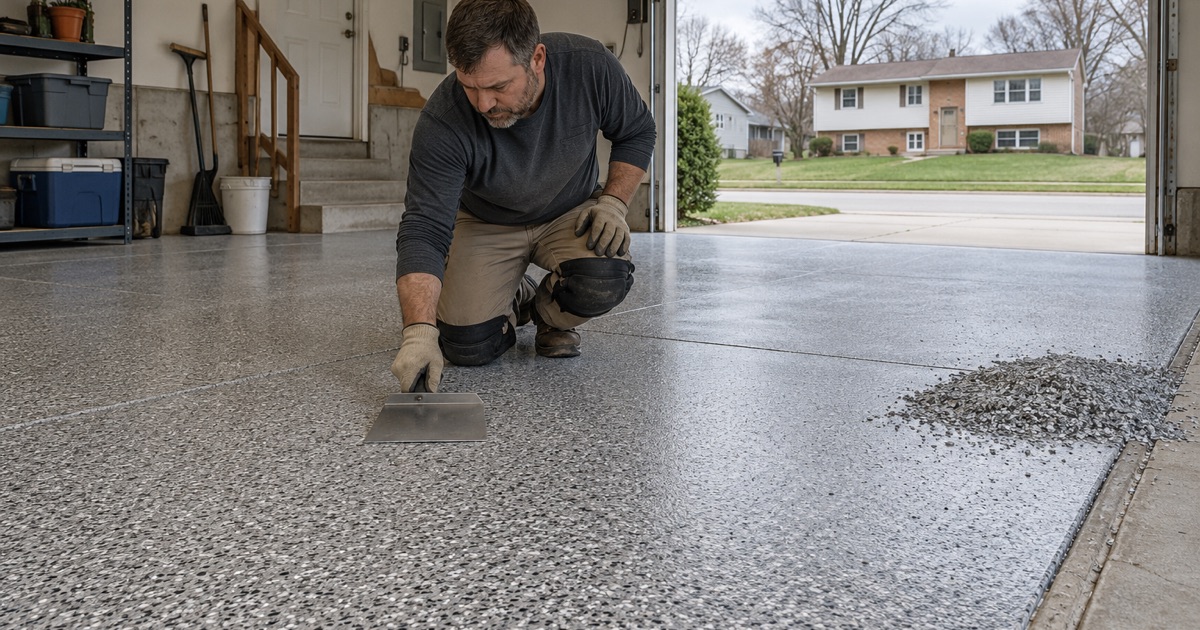
While the base coat is still wet, the flakes are thrown by hand across the floor in an even pattern. On a full broadcast, we keep adding flakes until the resin will hold no more, which is called broadcasting to refusal. That leaves a floor covered entirely in chips.
Once the base cures, the excess flakes are scraped and vacuumed away. The surface is checked for high spots and loose chips before the topcoat goes on. That step is what keeps the finished floor smooth to the touch rather than sharp.
Clear Topcoat
The clear topcoat seals the flakes and sets the final sheen and texture. Polyaspartic and urethane topcoats resist yellowing in sunlight and stand up to abrasion and chemicals better than epoxy. An anti-slip additive can be mixed in for extra grip.
The topcoat is the layer that takes the wear. When it eventually dulls in the busiest areas, it can be lightly abraded and recoated to refresh the floor without redoing the flakes.
Choosing a Flake Blend and Chip Size
Chip Size and Pattern
Flakes come in several sizes, from small chips that blend into a fine, granite-like texture to large chips that read as a bold, confetti pattern. Small chips look more uniform from a distance, while large chips show each piece clearly. The size also changes how the floor feels underfoot.
We bring boards with different chip sizes so you can see them side by side. Many owners choose a medium chip as a balance between pattern and texture.
Color Blends and Lighting
Flake blends range from neutral grays and tans to blends with blues, reds or browns mixed in. Garage lighting, basement lighting and daylight all change how a blend looks. A blend that looks warm in a showroom can look gray under cool LED lights.
That is why we show samples in your actual space during the walk-through. Seeing the blend on your floor, under your lights, is the best way to avoid surprises.
Matching the Floor to the Space
A lighter blend can brighten a dark basement or a garage with few windows. A darker blend hides dirt and tire marks better between cleanings. Some owners pick colors to match cabinets, walls or a business’s brand.
We talk through how the space is used before recommending a blend. A workshop that sees oil and grease may suit a darker blend, while a show garage may call for something lighter.
Why Flake Works in DeKalb Garages
Hiding Slab Flaws
Every slab has small imperfections, such as patched cracks, pits and minor color differences. A full flake broadcast hides most of them under the pattern. That makes flake a practical choice for older garage slabs that have been repaired.
The flakes do not fix structural problems, though. Cracks are still filled and ground flush first, and a slab that is heaving or breaking needs to be addressed before any coating.
Grip in Wet and Snowy Conditions
When a car pulls into the garage in January, snow and slush melt onto the floor. A smooth, glossy coating can become slippery when wet. The texture of a flake floor gives shoes and tires more grip.
Adding an anti-slip additive to the topcoat increases that grip further. We balance texture against how easily the floor can be mopped.
Standing Up to Rock Salt and Brine
Rock salt and calcium chloride brine scale bare concrete over a few winters. A flake floor with a durable topcoat keeps the brine on the surface, where it can be squeegeed or hosed out. The busy pattern also hides salt marks between cleanings.
We still recommend rinsing the floor regularly through the winter. Dried salt left for months is harder on any floor than salt removed promptly.
Flake Floors Beyond the Garage
Basements, Laundry Rooms and Workshops
Flake floors work well in basements, where they hide flaws in older slabs and add grip in laundry rooms. In workshops, they handle dropped tools and oil better than paint. Each one sits on a slab that has been tested for moisture.
Commercial Flake Floors
Locker rooms, restrooms, break rooms, showrooms and veterinary clinics use flake floors for their durability and easy cleaning. The texture adds slip resistance in wet areas, and the blend can carry a business’s colors. We schedule commercial work around opening hours.
- 20+ Years of Floor Work
- Moisture Testing in Every Scope
- Written Proposals and Contracts