
DeKalb IL Epoxy Flooring installs industrial epoxy flooring in DeKalb, IL, serving surrounding cities including Cortland, Sycamore, Genoa, Elburn and Rochelle. In more than 20 years of floor work, we have coated plant floors, warehouses and farm shops where the floor is a working tool, and where a failed floor means stopped forklifts and missed shipments.
Industrial floors carry forklifts, pallet jacks, racking, dropped parts and chemical spills. They need thicker systems than residential or retail floors, careful joint work and coatings chosen for the specific chemicals in the building. They also have to go down without shutting the operation down.
Every industrial proposal names the products, the system build, the finished thickness, the joint treatment and the phasing plan. The slab is ground or shot blasted and tested for moisture before any system is chosen.
Industrial Floor Systems
High-Build Epoxy Systems
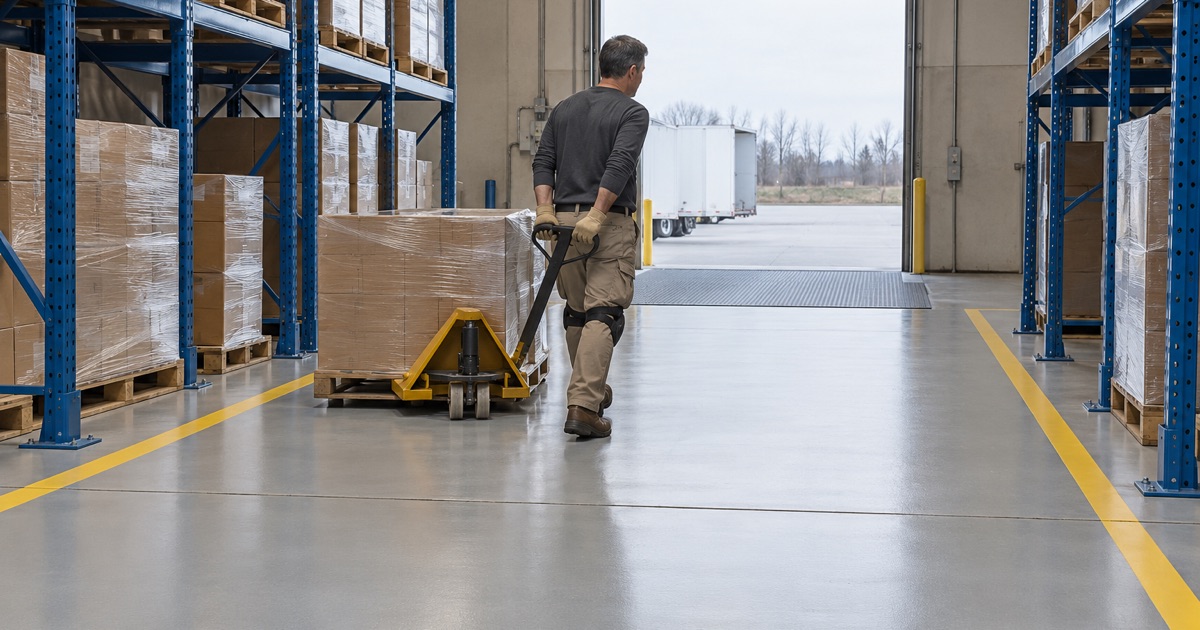
High-build epoxy systems lay down a thick film that handles heavy traffic and impact. A 100% solids epoxy bonds deeply into a shot blasted or ground slab and levels small flaws. The thickness is matched to the traffic in each area.
Thicker systems hold up better to dropped tools, steel wheels and dragged pallets. They are the backbone of most warehouse and plant floors we install.
Epoxy Mortar and Slurry Systems
Where floors take the heaviest impact and abrasion, such as loading docks or under machinery, a trowel-applied epoxy mortar or a self-leveling slurry adds even more build. These systems can also resurface a worn or scaled slab. They are then sealed with a durable topcoat. Mortar systems are slower to install and cost more, so we use them where the wear justifies them rather than across a whole floor.
Chemical-Resistant Topcoats
Plants handle oils, coolants, solvents, acids and cleaning chemicals. Standard epoxy resists many of them, but harsher exposures call for novolac epoxy or urethane topcoats. We choose the topcoat by reviewing the chemicals actually used in the building against manufacturer resistance charts.
The chart for a given product is the real answer, not a general claim. We share it with you so the choice is transparent.
Joints, Repairs and Slab Preparation
Shot Blasting and Diamond Grinding
Large industrial floors are usually shot blasted, which opens the surface quickly and leaves a profile suited to thick coatings. Edges, corners and areas around equipment are diamond ground. Both methods collect dust at the machine. Oil-soaked areas may need extra cleaning or grinding before coating, since oil in the concrete can prevent a bond.
Control Joints Under Forklift Traffic
Saw-cut control joints take a hit every time a forklift wheel crosses them, and unsupported edges chip and spall. We rebuild damaged edges with an epoxy mortar and fill the joints with a semi-rigid polyurea joint filler flush to the surface. The filler supports the wheels while still letting the slab move. Joint work is often the most valuable part of an industrial floor job, since broken joints damage equipment and loads.
Moisture Testing Large Slabs
Large slabs can vary in moisture from one area to another, especially where there is no vapor retarder beneath the floor. We test with ASTM F1869 calcium chloride kits or ASTM F2170 probes at several locations. Areas with high readings get a moisture-mitigation primer. Moisture failure is the first exclusion in most coating warranties, so we read the exclusions to you before the job is sold.
Where Industrial Epoxy Floors Work
Plants and Distribution Centers Along Interstate 88
Park 88 and ChicagoWest Business Park along Interstate 88 hold plants and distribution buildings that run forklifts and racking every day. Floors there need thick systems, durable joints and safety striping. We schedule work around shifts and outbound loads.
Distribution floors often wear unevenly, with the heaviest damage in the main forklift lanes, at dock doors and where pallets are dropped and dragged. We assess each zone separately and may specify a heavier system in the lanes and a lighter one under racking. That puts the budget where the floor actually takes the abuse.
Farm Shops and Machine Sheds
Farm shops and machine sheds around DeKalb take tracked-in mud, fertilizer residue, hydraulic fluid and heavy equipment. We build those floors thick and textured with chemical-resistant topcoats. Unheated sheds are scheduled for warmer months, since a cold slab cannot cure a coating properly.
Many machine sheds were poured with no vapor retarder and sit on wet ground for much of the spring, so moisture testing matters as much there as in any basement. Wide overhead doors also let in water and mud, so we pay close attention to the slab edge at the door. A floor that is sealed tight at the threshold holds up far longer.
Auto, Fleet and Equipment Shops
Fleet garages, equipment repair shops and auto shops deal with oil, coolant and dropped parts. Textured, chemical-resistant floors give grip and clean easily. Lift anchors and trench drains are detailed carefully.
In a northern Illinois winter, fleet vehicles and equipment also bring in rock salt and calcium chloride brine on every trip through the doors. A chemical-resistant topcoat keeps that brine from working into the concrete. We explain a cleaning routine that keeps salt from building up through the season.
Safety and Scheduling
Safety Striping and Slip Resistance
Aisle lines, pedestrian walkways and hazard zones can be built into the coating and sealed under the topcoat. Quartz broadcast or anti-slip additives add grip where oil or water reach the floor. We work from your safety plan.
Because the lines are part of the coating system rather than paint on top, they do not need repainting every year. Colors can follow the standard your facility uses for aisles, hazards and storage, and the layout is confirmed with you before anything is laid down.
Phased, Overnight and Weekend Work
We plan industrial floors around production. Work can be phased by area, done overnight or over weekends, or fitted into planned shutdowns. Fast-curing products shorten the time each area is out of service, and every product is chosen within the Illinois VOC limits for industrial maintenance coatings.
- 20+ Years of Floor Work
- Moisture Testing in Every Scope
- Written Proposals and Contracts